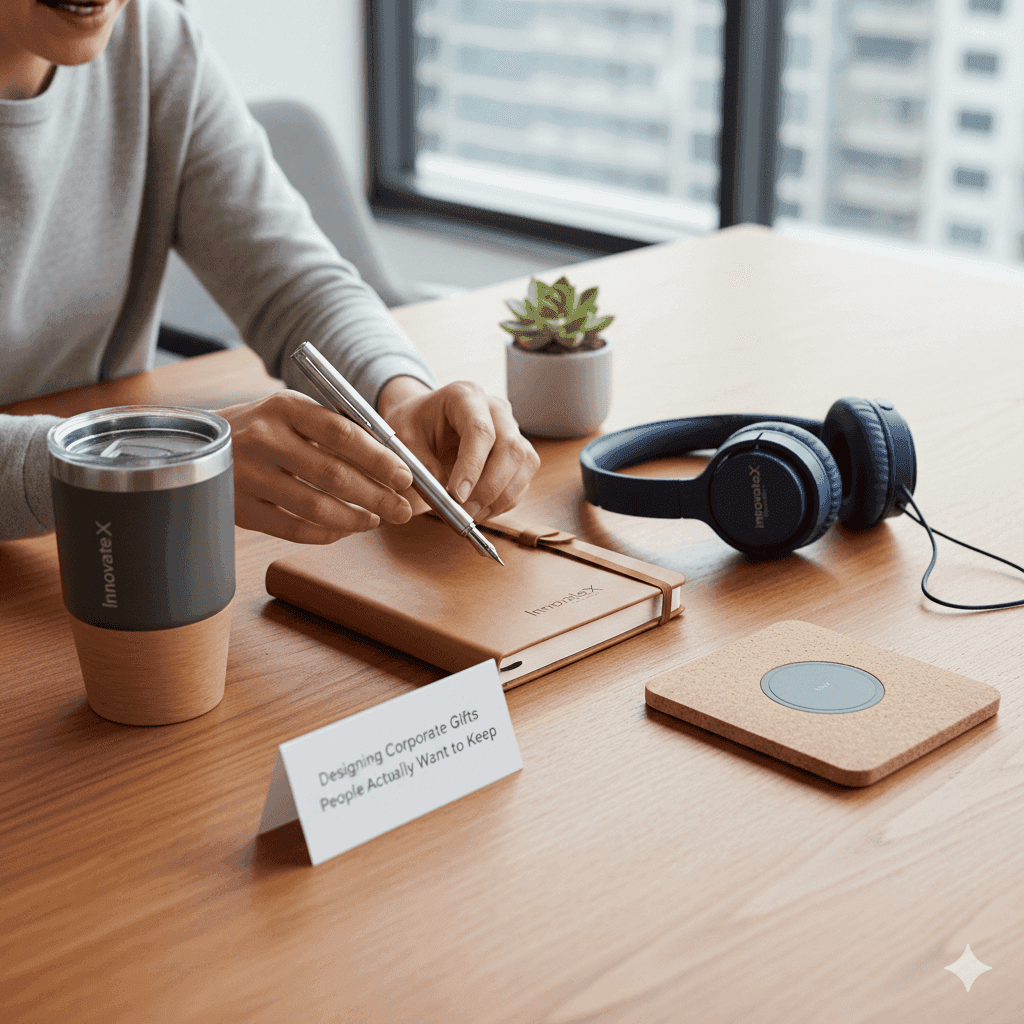
Designing Corporate Gifts People Actually Want to Keep
Corporate gifts are everywhere.
Mugs stuffed in kitchen cabinets. Totes folded into closets. Branded notebooks stacked in desk drawers that never open. The intention is usually good. The result? Clutter. Quiet disappointment. A missed opportunity.
For marketing, HR, and procurement teams, gifting isn’t about checking a box. It’s about signaling care, taste, and relevance. When a gift lands well, it sticks around. It gets used. It sparks a small emotional response that lingers long after the unboxing.
This article breaks down why most corporate gifts fail, what people actually value, and how thoughtful design—rooted in usability and emotional relevance—can turn a budget line item into something people genuinely want to keep.
Why Most Corporate Gifts Miss the Mark
Let’s be honest. Most gifts don’t fail because of bad intentions. They fail because they’re designed for convenience instead of people.
Clutter Fatigue Is Real
People are tired of stuff.
Homes and workspaces are already full, and another low-quality object feels like a burden rather than a benefit. When a gift doesn’t have a clear purpose, it becomes visual noise. That’s why so many items quietly disappear within weeks.
Sustainability concerns amplify this reaction. Disposable-feeling gifts trigger guilt. If something looks destined for a landfill, recipients notice—and judge.
Branding Overuse Kills Desire
A logo shouldn’t be the headline.
Oversized branding turns a gift into an advertisement, and nobody asked for another one. When design revolves around brand visibility instead of daily usefulness, the item stops feeling personal and starts feeling transactional.
One-Size-Fits-All Rarely Fits Anyone
Teams are diverse. Preferences vary. Life stages differ.
Yet many corporate gifts assume sameness. That disconnect shows. People keep gifts that feel considered, not generic.
Data backs this up. In the 2025 Employee Gifting Report from Giftsenda, 55% of gift buyers admitted they struggle to choose gifts employees actually want. That uncertainty often leads to safe—but forgettable—choices.
What People Actually Value in Corporate Gifts
Here’s the shift that matters: people don’t want more things. They want better ones.
Use Comes First
If it doesn’t get used, it won’t get kept.
Practicality doesn’t mean boring. It means the item earns its place in someone’s routine. Think daily, weekly, or situational use—not once-a-year novelty.
A water bottle that fits in a car cup holder. A hoodie that feels good enough to wear on weekends. A notebook with paper that doesn’t bleed.
Small details decide everything.
Emotional Signals Matter
Gifts communicate more than words.
They say, “We see you.” Or they say, “This was easy to order.” People feel the difference instantly.
Research from SHRM shows employees with a positive experience at work are 68% less likely to consider leaving. Nearly half of job satisfaction—49%—is influenced by that experience, which includes recognition and appreciation efforts like gifting.
A thoughtful gift isn’t fluff. It’s part of how people decide whether they belong.
Shareability Adds Value
Some of the most appreciated gifts aren’t strictly personal.
According to the 2023 State of Corporate Gifting Report by Giftsenda, 76% of employees prefer gifts they can share with family or colleagues. Food items. Home goods. Experiences. These extend the emotional reach beyond the individual recipient.
And yes, that matters for brand perception too. The same report found 52% of recipients were more likely to do business with a company after receiving a corporate gift.
The Role of Design in Keep‑Worthy Gifts
Design isn’t decoration. It’s decision-making.
Usability Is a Design Choice
Good design solves friction.
Does the bag sit comfortably on a shoulder? Does the lid seal properly? Does the fabric hold up after ten washes? These questions decide whether a gift becomes part of someone’s life or quietly exits it.
When usability leads, aesthetics follow naturally.
Subtle Branding Wins
People don’t mind branding when it feels earned.
Small placements. Tone-on-tone marks. Thoughtful color choices. These approaches let recipients enjoy the product without feeling like walking billboards.
This is where design teams earn their keep.
Personalization Without Creepiness
Personalized doesn’t mean invasive.
It can be as simple as:
Letting recipients choose colors or sizes
Offering a short menu of gift options
Customizing packaging or messaging rather than the item itself
Peer‑reviewed research from Emerald Insight shows structured recognition programs—especially those with personalized elements—correlate with stronger engagement and performance outcomes. Gifts work best when they feel intentional, not automated.
Sustainability Isn’t a Bonus Anymore
It’s an expectation.
Materials Send a Message
Reusable beats disposable. Durable beats trendy.
Sustainable materials, ethical sourcing, and transparent production practices all shape how a gift is perceived. Even if recipients don’t research every detail, they sense quality and care.
A gift that lasts quietly reinforces trust.
Less Stuff, Better Stuff
Sustainability also means restraint.
Instead of multiple small items, one well-made piece often lands better. It reduces waste and increases perceived value.
This aligns with broader industry behavior. According to the Incentive Research Foundation, 93% of surveyed incentive professionals include merchandise or gift cards in reward programs, with nationally recognized items used by more than half of North American organizations. The trend points toward fewer, more considered rewards.
Clothing: High Risk, High Reward
Apparel deserves special attention.
When it’s wrong, it’s very wrong. When it’s right, it becomes a favorite.
Fit, fabric, and style all matter more than logos. That’s why thoughtful t-shirt design focuses on wearability first. Neutral colors. Quality materials. Designs people would choose even without branding.
Ask yourself one question: would someone buy this on their own?
If the answer is no, go back to the drawing board.
Budget Isn’t the Villain
Cheap gifts feel cheap. Expensive gifts aren’t always better.
Value Lives in the Middle
Giftsenda’s 2025 data shows 67% of employees feel most appreciated when a gift’s value falls between $50 and $100. That range allows for quality without excess.
It also forces prioritization.
One strong item beats a box of filler.
Insight Beats Guesswork
When teams lean on research instead of assumptions, outcomes improve. Reports like this business gifting insights report highlight shifting preferences and common missteps, helping teams choose with more confidence.
Data doesn’t replace taste—but it sharpens it.
Designing the Experience, Not Just the Item
Gifting doesn’t start or end with the object.
Packaging, timing, and messaging all shape perception. A handwritten note. A short explanation of why the gift was chosen. Even thoughtful delivery timing can elevate the moment.
These touches don’t add much cost.
They add meaning.
Conclusion: Keep‑Worthy Is the New Benchmark
Corporate gifts shouldn’t beg for space. They should earn it.
When teams design with usability, emotional relevance, and sustainability in mind, gifts stop feeling obligatory and start feeling personal. Research shows people value items they can use, share, and feel good about keeping. Subtle branding, smart design choices, and light personalization go further than loud logos ever will.
For marketing, HR, and procurement teams, the goal isn’t volume. It’s resonance.
Fewer gifts. Better ones.
The kind people don’t toss.
Share on: